


Sadly, I will never forget the day I fell for a bribe.
I was 17 and working in the garden shop of a large Kmart outside of Chicago. (These were the 1980s when Kmart ruled the land, though a young whippersnapper named Walmart was starting to make some noise.) I was proud of the fact that though a teenager, my bosses saw something in me they liked, so they actually gave me considerable responsibility. But one busy Saturday in spring, when half of Chicago’s aspiring gardeners seemed to be in our patio shop, I was helping a customer load up some trees and shrubs in his truck. When I found out he hadn’t paid for them yet, I said, “No problem, I’ll write you up a ticket and we can go take care of it.”

Suddenly, he put a crisp, clean $50 bill into my hand and said, “Hey, no one is going to miss these few trees. Why don’t you keep this and we’ll call it square.” He wasn’t wrong. Though he easily had more than $200 in plants loaded up, the inventory was so loose and the store so busy, that no one would notice it. And for some reason, I paused to actually consider his suggestion. Taking my silence as consent, the man patted me on the shoulder, got in his truck and drove off.
It all happened in less than a minute. At once my head cleared and I realized what a shocking, stupid thing I had just done. (Later as I replayed the scene in my mind, instead of pausing, I punched him out, hauled him to security, and he’d still be doing time today if I hadn’t lost my integrity.)
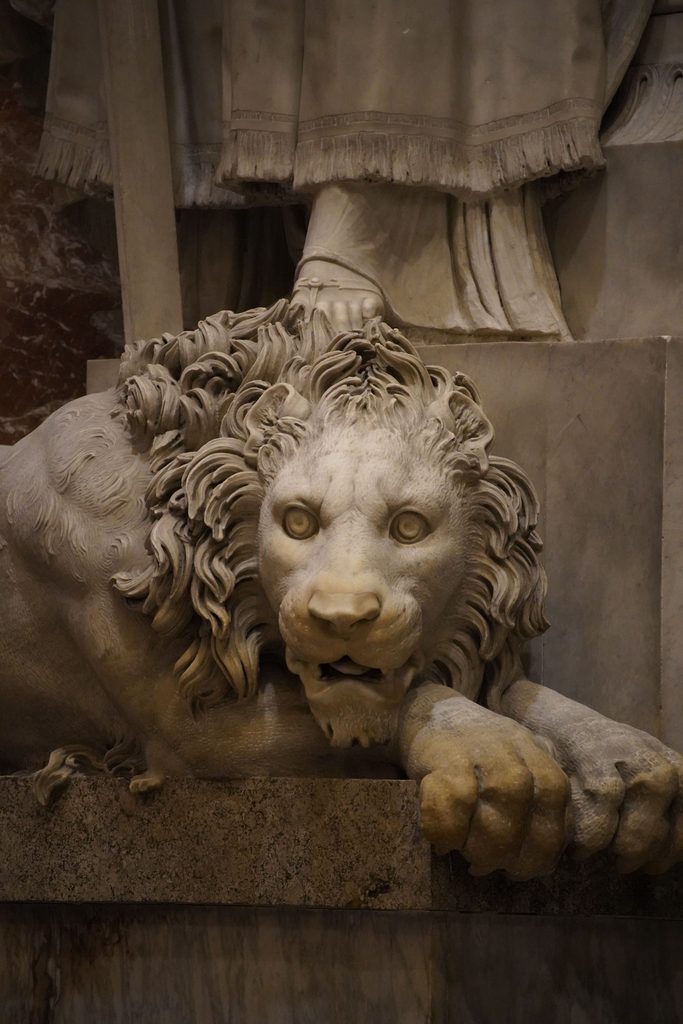
I was thinking about my sad moral lapse in judgment the other day as I was re-reading the great story of Daniel in the lions’ den. The reason Daniel ended up in the lions’ den was because he refused to surrender his moral convictions. The passage in Daniel 6 goes out of its way to define integrity simply by describing Daniel’s character.
What’s integrity? It’s someone who is not afraid to stand up and stand out for what is good. Verse 3 says that Daniel “became distinguished above all the other high officials”. It used to be that we made heroes out of people who accomplished great feats, or made great discoveries, or showed great courage. Now we idolize celebrities, and actors, and the builders of great business empires, while the moral quality of their lives doesn’t matter at all. Sadly, we often do the same thing in the church. We’re so enamored by the gifts of the Spirit that many of our favorite pastors and worship leaders possess that we’re willing to overlook the lack of the fruit of the Spirit in their character.
The same verse goes on to say that Daniel had an “excellent spirit”. Integrity is also shown by a person who pursues moral excellence. Paul instructed his disciples to set their minds on things that were true, honorable, pure, and excellent (Phil.4:8).

There’s something about the gospel, when it’s understood properly, that just brings out the best in people. Intuitively, that might not add up. How can a message which teaches we’re not saved by anything we do but by God’s goodness and grace alone motivate us to give God our best? Again Paul said it best. “Whatever you do, work heartily, as for the Lord and not for men, knowing that from the Lord you will receive the inheritance as your reward. You are serving the Lord Christ.”(Col.3:23-24)
Look at the cathedrals that were built a thousand years ago. Why are they so majestic? Because they were built for the glory of God. When Bach wrote out his astonishing musical compositions, he would often write the letters SDG (Latin for Soli Deo Gloria – to God alone be the glory). When you do something where your highest motive is for the glory of God, how can you not aspire to give God your very best?
A note of caution here though. There are people we’ve all met whom we’d call “perfectionists”, They want to do everything “with excellence” too, but if you look closely at them, you’ll see a drivenness in them which is miles away from the gospel. How do we know? Because there’s little if any joy or playfulness in it. If they make a mistake, it’s devastating to them. If someone messes up around them, they’re highly critical. That’s not the spirit of excellence which the gospel inspires and which Daniel modeled.
Daniel was also incorruptible, another trait of integrity. Verse 4 says Daniel’s enemies “could find no ground for complaint or any fault in him…” The shame I felt about that Kmart incident is because there was something in me that that bent and broke when pressure was applied. I didn’t know it was there. I thought I was good. I didn’t start out that day looking for ways to rip off my employer and dishonor my heavenly Father. But then it happened. I was corruptible after all!

Ask yourself: How much would it take to get me to back off from a moral standard I have set for myself? But keep this in mind. If you can be bought for a million dollars, you’re not twice as good as a person who can be bought for $500,000. The only thing you’ve proven is that you can still be bought. You are not incorruptible.
Then verse 4 says of Daniel “…he was faithful”, reminding us that a person of integrity is trustworthy. The thing about being trustworthy is that it’s only evident when a person is left alone. If you are trustworthy, then that means you can be counted on when you’re not being watched. The famous preacher DL Moody famously said, “Integrity is what a person is in the dark.” Therefore…I failed the test that morning.
Thankfully the gospel provides an amazing gift for everyone like me who has a resume of failed tests in their soul’s file cabinet. That gift? Forgiveness. Bought by the blood of the only person in human history who modeled integrity 100% of the time…Jesus Christ. Daniel is a good example to follow but even he knew that he needed God’s grace and strength to survive. Jesus Christ is a Savior to follow. He’s the very source of God’s grace and strength himself. Why don’t you pause right now and call out to him for help in facing the day that’s ahead of you.
Questions To Ponder
- Looking back at your life, have there been times when you surprised yourself by your lack of integrity? Why do you think this happened to you?
- “Integrity is what a person is in the dark,” DL Moody once said. How can we cultivate greater consistency between who we appear to be publicly and who we are privately?